
by Alana Kysar

I thoroughly enjoyed cooking from this book. Years ago, a friend and I decided to throw a Hawai’ian-themed party. My job was the food, but I really had no idea what people eat in Hawai’i. I think the only thing I had in mind at the time was ham and pineapple on pizza (which is actually not a thing in Hawai’i, it turns out). Despite searching everywhere, all I could find in the way of recipes was a very thin, picture-free cookbook that seemed to just have a bunch of random recipes thrown together. Portuguese sausage and kale soup? I remember being so confused and thinking that the food in the book didn’t make sense. I ended up settling on the soup, since I was in the middle of CSA kale overload, and some type of coconut pudding. We may have had more than that, but that’s all I remember. Besides some tiki-inspired cocktails, of course!
Fast-forward to 2022 me who came across this cookbook somewhere and finally got clarification after reading the well-written introduction. It starts with native Hawai’ian food and then walks you through successive waves of colonization and immigration to the island, and the food that came along. Turns out, it is really a total mash-up of cuisines: not fusion-style, but plate lunch style, as author Alana Kysar describes it. Dishes from China, Portugal, England, Japan, Korea all live happily next sitting next to each other.
Alana Kysar currently lives in Los Angeles but was born and grew up in Hawai’i and this is a look into the types of food she grew up eating with friends and family. Reading through the book, it’s like a good friend is taking you on a tour of her home state, driving you around to all her favorite places to eat, and then taking you home for her mom’s cooking. The writing is intimate and easy, and I found myself daydreaming about a Hawai’ian vacation.
Most ingredients can be easily found in a well-stocked mainstream grocery store (or if you have a Japanese- and/or Chinese-leaning Asian grocery store nearby, you’ll be fine). I had most things already, but I did need to order Hawai’ian sea salt (‘alaea) online. Course-grained Himalayan salt, which is usually easy to find these days, would be a reasonable substitution, if you didn’t want to bother.
My three favorite recipes from the book:
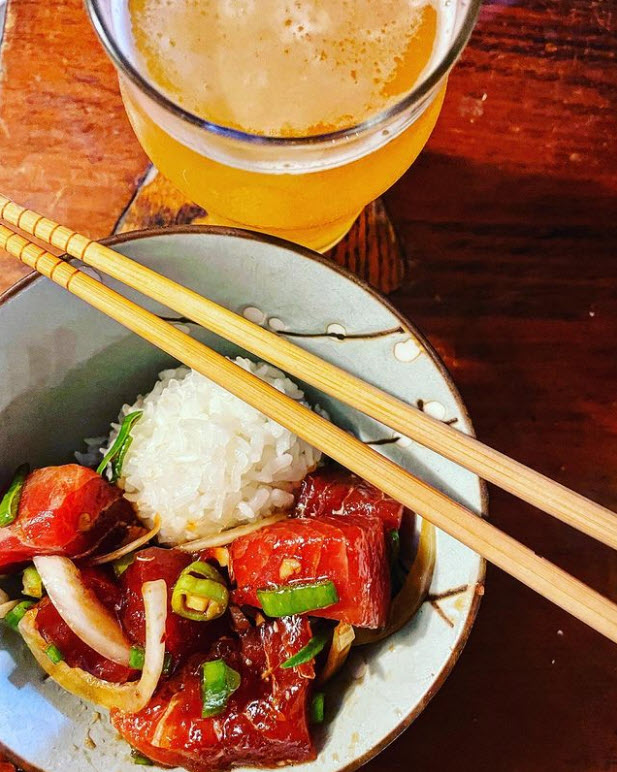
Shoyu ‘ahi poke. I keep making this one over and over (and over and over). The first time I made it, I immediately started craving it again after the last bite. The best part about it, besides how delicious it is (my mouth is watering IRL as I type this), is that it takes about five minutes to throw together. Ok, maybe ten but that’s only because you have to toast the macadamia nuts. Just start out with good quality fish and dinner is basically made.
Local tip: I get my fish from Cape Ann Fresh Catch which is out of Gloucester, but makes weekly deliveries to pick-up spots all over the Eastern part of the state. You can sign up for their weekly CSA or just do one-time orders (which is what I usually do, although I did do the CSA thing with them for a few years). Their weekly specials are worth keeping an eye on, too.
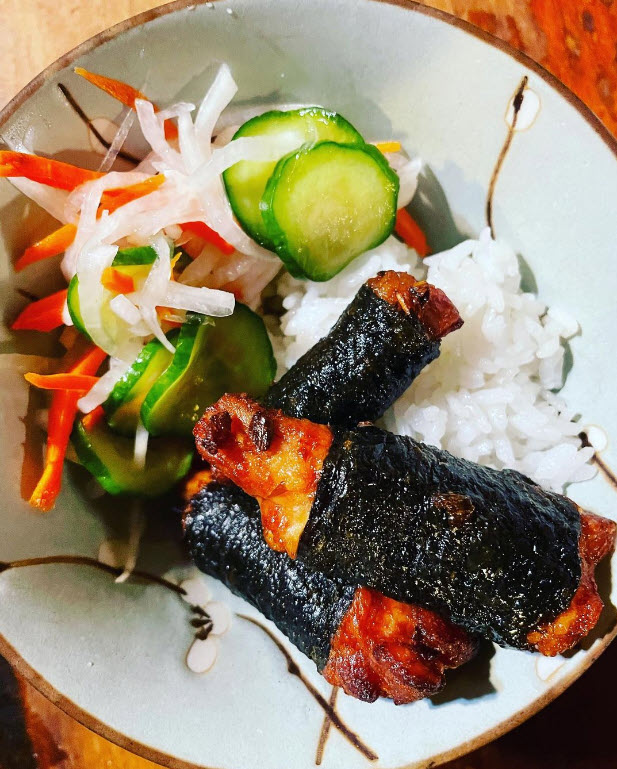
Mochiko chicken. If you eat chicken, then you should make this (if not, I bet mushrooms would make a great stand-in for the chicken). It’s juicy morsels of umami goodness. Sort of like if sushi and teriyaki chicken skewers had a baby. Definitely make the namasu to eat alongside–it’s like the pickled vegetables (carrots, cucumbers, and daikon) that go in bánh mí, those delicious Vietnamese sandwiches.
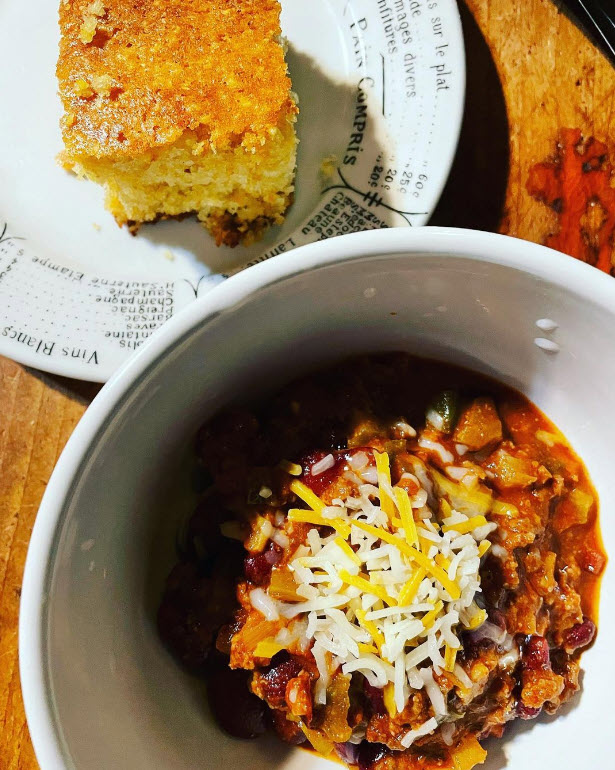
Beef chili. This was really a perfect bowl of chili. It does have a Portuguese sausage (linguça) pre-recipe (if you make it, you’ll have leftovers that you can eat for breakfast) which is worth making if you can’t find it in a store; but you could sub in Mexican chorizo (the uncooked kind, not the cured Spanish kind), if that’s easier to find. There is also a recipe for cornbread that is the cornbread recipe I have been waiting my whole life for (it has vanilla extract, which I think is brilliant, as I am firmly in the cornbread-should-be-sweet camp); and, of course, the beef chili itself. All the parts are simple, and you could easily make this on a weekend, but I spread this out over a couple of weekdays (making the sausage on day one, cornbread and chili on day two) and it didn’t feel like a lot that way.
Other things I made from the book that I liked:
Assorted liliko’i (passion fruit) recipes. A store near me must have majorly over-ordered passionfruit (in Massachusetts? in December?) and had big packs of them for cheap. I’m guessing someone mistakenly added a few extra zeroes to their order. Unless there is a really popular winter holiday passion fruit dish that I’ve never heard of, in which case I want to know what it is and why it wasn’t made this year and could you please send the recipe. In any case, I loaded up so much that the cashier looked at me oddly as I approached the register with my passion fruit mountain. Note to self: although totally worth the effort, next time try to find it in pulp form–these buggers take a while to process and produce very little juice for the squeeze (literally). In any case, I was able to crank out shave ice syrup, chiffon pie, and salad dressing, and even had some pulp to spare that I froze for the future. Also, I am trying to make bitters with the leftover seedy pulpy bits, but this is my first try at bitters, and I’m winging it, so we’ll have to see how that goes.
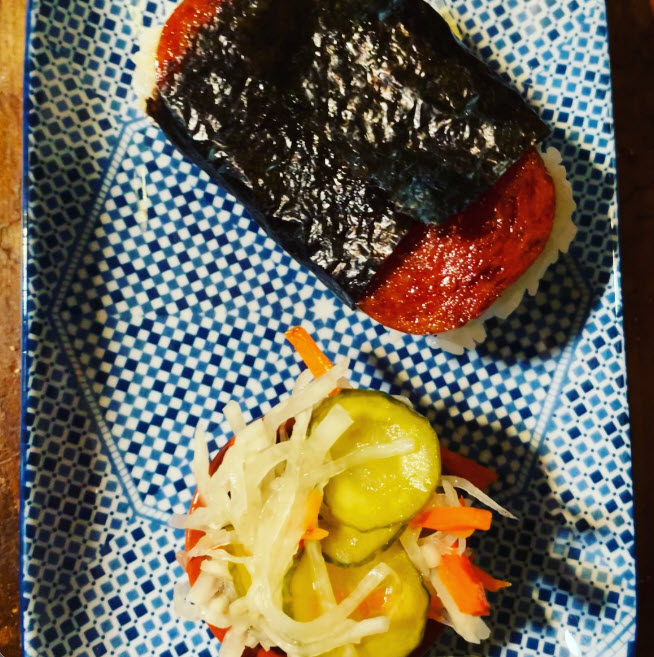
Soy-glazed Spam musubi. AKA spam sushi, I felt like I had to make this one, since I have a soft-spot for preserved meat products. Also, I once took a sushi-making class in college (just a one-night thing I came across randomly in the local paper) from a woman who lived half the year in Western Massachusetts and the other half in Hawai’i. She went on a tangent about how spam sushi is a big thing there, so when I came across this recipe in the book, I was all over it.
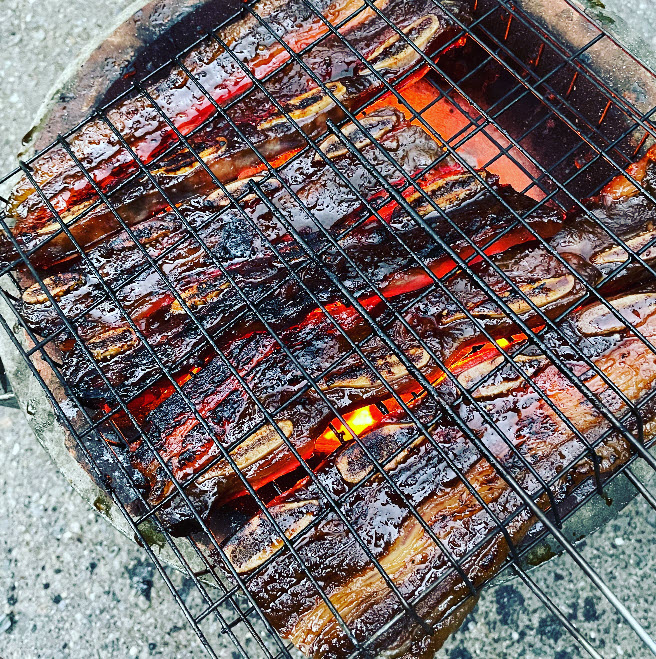
Maui-style kalbi short ribs. Deliciously-marinated ribs cooked over fire. Mmm…
Dry mein. This one is a good quick recipe. I cheated and bought fresh noodles from a local Asian market (the book has a recipe for making the saimin noodles from scratch, which I’m saving for when I’m feeling ambitious some day), but thin, dried wheat or even soba noodles would have worked well, too.
Local tip: there is an Asian market in Acton, MA, aptly-named Acton Asian Market, that has an amazing selection of fresh and frozen noodles (and baked goods). [Update: Acton Asian Market has since closed, but Mei Ya Market, which sells similar items–including a good selection of fresh noodles–has opened in its place.]
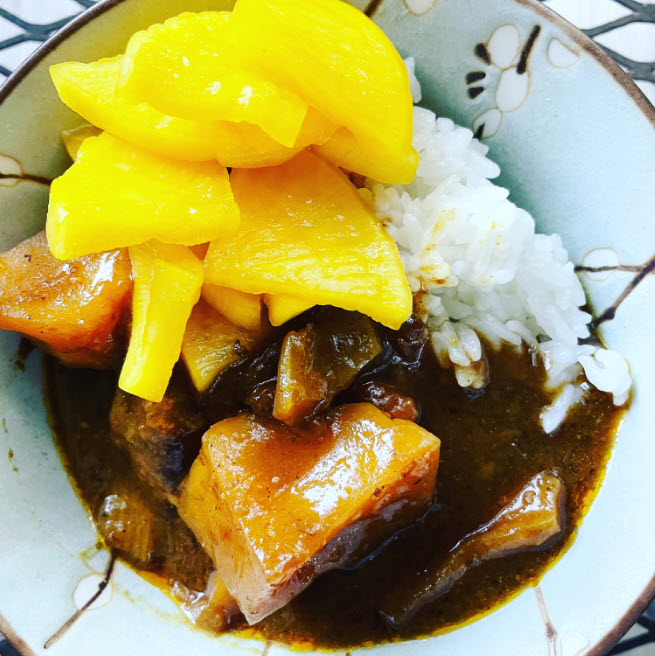
Beef stew. After making and eating this, I am now convinced that beef stew should always be eaten with pickled radishes on the side. Specifically takuan, which is the sweet, sour, and spicy Hawai’ian (Japanese?) cousin of danmuji (단무지), a type of Korean pickled daikon radish. I love takuan so much, I eat it straight from the jar, but my family makes me go outside before I even open the jar–it is fiercely pungent.
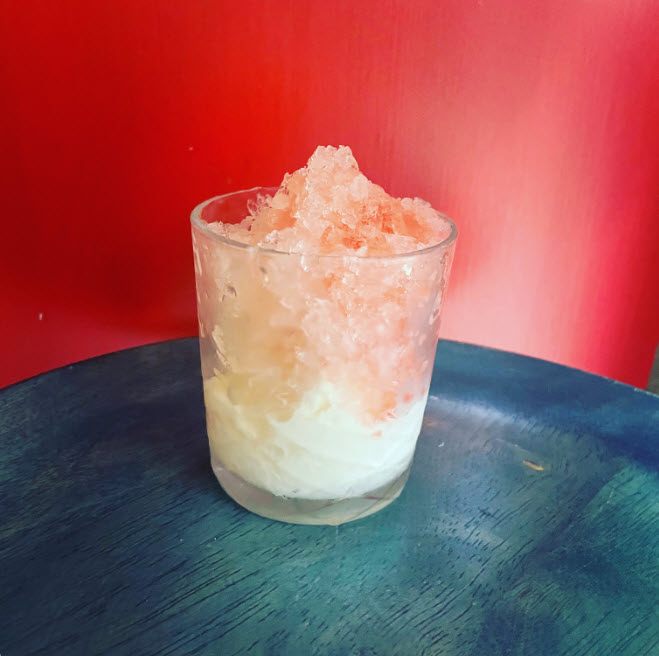
Shave ice. I know I mentioned shave ice above with the passion fruit, but this deserves its own entry since they’re fun to make and eat. The book has recipes for three different flavor syrups: vanilla, passion fruit, and strawberry. When I originally made this, I couldn’t find passion fruit, passion fruit pulp, or passion fruit juice anywhere, so I followed the recipe using black cherry juice, and that was also good. You could do the same with any berry or fruit juice and that would work fine (the recipe is just juice, or berries and water, + sugar).
When I was pregnant with my first kid, my husband took the birthing class at the hospital very seriously and we ended up bringing totally unnecessary things to the hospital with us. Like ridiculous things, including an ice shaving machine. If there is one thing you can count on a hospital to have, it’s an abundance of crushed ice, but he insisted we needed to bring it. Not surprisingly, we never used it, but the nurse with us thought it was hysterical when we offered to make her a snow cone. In any case, since we were equipped, I made the syrups and my kids had a great time making and eating these over the summer.
This was one of my favorites cookbooks from last year (it was actually published in 2019, but I didn’t stumble across it until 2022). I had originally gotten it out from the library since I like to test drive cookbooks before buying them, whenever possible, and bought myself a copy when I ran out of renewals because I didn’t want to give it up. Definitely a keeper for me.
Incidentally, there is also a recipe for Portuguese bean soup (with sausage and kale) in there, and for haupia (a coconut pudding-type dessert), so it turned out that the cookbook I used years ago made more sense than I had originally thought–I guess I just needed more context. I haven’t made either of those recipes yet, but, assuming they are as good what I’ve made from the book already, I’m sure they’ll be delicious.
One more look at the pickled vegetables…


 rabbit hole kitchen
Leave a comment